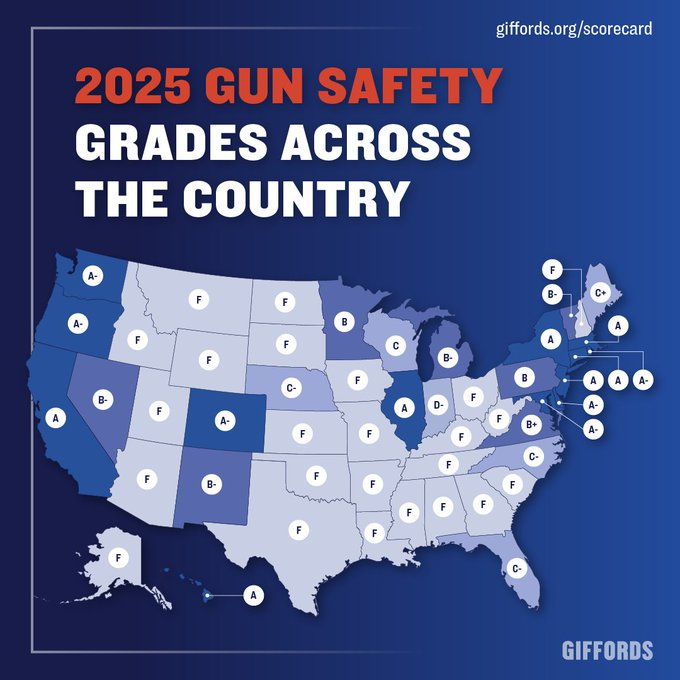
We expected the gun control industry to have a hissy fit if and when the House of Representatives voted to removed suppressors from the National Firearms Act. We were not disappointed.
From Everytown:
“There’s a reason silencers have been regulated for nearly a century: They make it much harder for law enforcement and bystanders to react quickly to gunshots,” said John Feinblatt, president of Everytown for Gun Safety. “In the name of gun industry profits, House Republicans are putting law enforcement and our communities at greater risk of being shot — all while gutting health care for millions of Americans.”
A silencer is a device that helps dampen a firearm’s sound signature and eliminate its muzzle flash by allowing the hot gasses that follow a bullet down the barrel to expand and cool before hitting the air outside of the gun. Silencers work like car mufflers, but for firearms. As a result, it is more difficult for bystanders and police to identify that a gun has been fired or where gunshots originate.
Because of the danger they pose, silencers have been highly regulated since 1934. People who want to buy or build a silencer must first submit an application to the Bureau of Alcohol, Tobacco, Firearms and Explosives (ATF) with their fingerprints, a passport-style photo, and a $200 tax stamp — a fee that has not been raised or adjusted for inflation since 1934 — and undergo an enhanced background check. All of these requirements are now on the chopping block.
Suppressors reduce the report of a firearm by approximately 30 decibels. What does that mean in real terms. The chart below illustrates the decibel level of a suppressed and unsuppressed firearm.
As to the lie that police and bystanders would have a hard time identifying gun shots if a suppressed firearm was used, 130 decibels – or the approximate amount of a 9mm suppressed – is the sound level of a military jet taking off from a carrier deck and can cause harm to one’s hearing.
No, you can’t always get what you want You can’t always get what you want You can’t always get what you want But if you try sometime you’ll find You get what you need
The House of Representatives passed One Big, Beautiful Bill aka the budget reconciliation bill very early this morning. It passed 215-214 with 2 Republicans voting no and 1 voting present. Included in the bill was a provision that removed suppressors from the National Firearms Act.
We wanted to get both the Hearing Protection Act and the SHORT Act in the final bill as sent to the Senate. We only got the Hearing Protection Act provision which removed suppressors from the National Firearms Act.
Is this a loss?
The answer is an unequivocal no.
As any trader in a Third-World market would tell you, the bidding process begins by asking for more than you reasonably think you can get. By asking for both the HPA and the SHORT Act it gave us room to bargain. While we wanted both, getting suppressors removed from the National Firearms Act is much better than what the Ways and Means Committee was offering which was a reduction of the tax to zero but with suppressors remaining registered in the NFA. In my opinion, if we had started the negotiations with only asking for the Hearing Protection Act then we probably would have only gotten the reduction in tax.
This now goes to the Senate where we must fight to keep this provision in the bill. It, of course, has riled up the gun control industry but that was to be expected.
Provided this passes the Senate and suppressors are removed from the NFA in their entirety I expect to see an explosion in the sales of suppressors as well as court battles in those states like Illinois, New York, and California that ban suppressors. I look forward to the latter as it is hard to argue against something that reduces overall noise pollution and is backed as a health safety device by the medical community.
The quick answer to the headline is the House Rules Committee. They are scheduled to meet to discuss the budget reconciliation bill aka A Big, Beautiful Bill at 1am Eastern on Wednesday morning.
And here I have thought the House Budget Committee reconvening their markup meeting on the budget reconciliation bill at 10pm Sunday night was a bit unusual.
If you are awake and want to watch the sausage being – I mean legislation considered – there will be video.
In a tweet on X from Erich Pratt of Gun Owners of America which featured a video of an interview with Mr. Roy, it was noted that a lot of progress had been made on suppressors and they are still working of SBRs and SBSs.
We had a great day on Capitol Hill meeting with 2A champions about the fight to deregulate suppressors and short-barreled rifles.
Big thanks to @chiproytx for standing with gun owners and encouraging GOA members to tell their reps to support HPA & SHORT Act!
I guess we may know tomorrow morning when we get up to have our morning coffee.
While it appears that many state level groups and others such as GOA are going for the whole enchilada, i.e., SBRs, SBS, AND suppressors, it appears the NRA has given up on anything more than suppressors. This is from my reading of an alert sent out on Monday urging people to call representatives to push for the inclusion of suppressors in the bill. In my opinion – and it is only my opinion – this is a mistake as a win on the whole lot would galvanize the grass roots and mark the NRA as hard-core supporters of gun rights.
A number of state-level Second Amendment groups along with a few individuals have signed an open letter to Chairman Jodey Arrington (R-TX) of the House Budget Committee and Chairwoman Virginia Foxx (R-NC). The letter demands the inclusion of portions of both the Hearing Protection Act (HR 404) and the SHORT Act (HR 2395) into the budget reconciliation bill.
The signatories represent constituencies from coast to coast and North to South. I expect more groups to sign on to this letter as the evening progresses. I find it remarkable that this many groups can come together to sign this letter in little more than a day and a half.
If you represent an organization that ought to be a signatory to this letter, you can contact Rep. J. R. Hoell of New Hampshire at RepJRHoell@gmail.com to add your name and organization.
The letter has been updated to add elected officials to the list. Signatories are still being added and it is not too late to add your name to the list.
As someone commented on Reddit, “Closed mouths never get fed.” Meaning if we don’t ask or demand it, we will never get either the SHORT Act or the HPA. We may not get all we want but we would get nothing if we didn’t ask for it.
The budget reconciliation bill aka the One, Big Beautiful Bill failed in a vote of the House Budget Committee on Friday. The bill failed 16-21 as four Republicans joined with the Democrats to defeat the bill as written. It wasn’t just fiscal measures such as the tax cuts and credits for state and local property taxes that killed it. Another reason was the halfway measures regarding firearms related legislation included in the bill. In particular the bill did not remove suppressors, SBRs, and SBSs from the National Firearms Act. Instead it just lowed the tax on suppressors to zero but left the requirement that they be registered under the NFA in place.
The House Budget Committee reconvenes tonight at 10pm (weird time!) to reconsider the bill with potential amendments. Second Amendment activists, especially those at the grass roots level, are strongly asking that both the Hearing Protection Act and the SHORT Act be included in the final bill. The former would remove suppressors from the NFA while the latter would remove short barreled rifles and shotguns from the NFA along with making pistol braces legal by definition. As both measures are tax related, it is my understanding that they would not violate the so-called Byrd Rule.
North Carolinians should be aware that Representatives Chuck Edwards (R-NC-11), Tim Moore (R-NC-14), and Addison McDowell (R-NC-6) are all members of the House Budget Committee. The committee also includes 2A stalwarts such as Rep. Ben Cline (R-VA) who is the author of the Hearing Protection Act and Rep. Andrew Clyde (R-GA) who is the author of the SHORT (Stop Harassing Owners of Rifles Today) Act.
The House Budget Committee is accepting comments:
Individuals or organizations may submit a written statement for consideration by the Committee and for inclusion in the printed record. Any person(s) or organization(s) can submit written comments for the record here: Ryan.Bailey@mail.house.gov.
There is a joint letter being formulated that I will post later this evening. It is being signed by many in the 2A community.
In the meantime, here is the alert sent out by Grass Roots North Carolina asking people to contact their representatives and especially Rep. Virginia Foxx (R-NC-5) who chairs the House Rules Committee. It can also be the basis of your submission to the House Budget Committee.
DEMAND INCLUSION OF NFA REFORMS
WHAT IS HAPPENING?: Due to delays in passage of the budget reconciliation bill in Congress, there is an opportunity to make much needed reforms to egregious restrictions in the1934 National Firearms Act (NFA).
IMPACT: Specifically, reforms include removal of firearm suppressors from the NFA regulatory framework and changing the classification of short-barreled rifles (SBRs) and short-barreled shotguns (SBSs) which subjects them to the same onerous regulations as machine guns and other highly restricted devices. Many of us have been subject to these ridiculous restrictions of our constitutional rights.
IMMEDIATE ACTION REQUIRED!
IMMEDIATELY CONTACT Congresswoman Virginia Foxx (R-NC) and urge her to incorporate NFA Reforms into the budget reconciliation bill. Virginia Foxx D.C. Office: (202) 225-2017
Use your Congressional representatives contact form to submit the letter below:
DONATE TO GRNC: We are still low on funds after our highly successful election effort. Please donate by going to our website.
Suggested Subject: “Incorporate NFA Reforms into Reconciliation Bill”
As your constituent, I respectfully request immediate inclusion of portions of the Hearing Protection Act (H.R. 404) and the Stop Harassing Owners of Rifles Today (SHORT) Act (H.R. 2395) in the forthcoming reconciliation bill. These critical pieces of legislation address longstanding, unjust restrictions imposed by the National Firearms Act (NFA) of 1934 which infringe upon the Second Amendment rights of law-abiding Americans. The failure to incorporate these bills into the reconciliation package would represent a profound missed opportunity to restore individual liberty, protect public health, and uphold constitutional guarantees.
The Hearing Protection Act (H.R. 404), introduced by Representative Ben Cline (R-VA-06), seeks to remove firearm suppressors from the NFA’s burdensome regulatory framework, replacing it with a streamlined purchase process for typical accessories. Suppressors, contrary to popular misconceptions, do not silence firearms but significantly reduce noise levels, mitigating the risk of permanent hearing loss for shooters and hunters. The American Academy of Otolaryngology–Head and Neck Surgery has endorsed suppressors as effective tools for preventing hearing damage, a public health concern affecting millions of Americans. The current NFA requirements — including a $200 tax stamp for both manufacture and transfer of the devices, extensive paperwork, and excessive waiting times — serve no meaningful public safety purpose while imposing undue financial and administrative burdens on responsible citizens. With over 4.8 million suppressors in civilian circulation, their widespread use underscores the need for reform.
Similarly, the SHORT Act (H.R. 2395) addresses the arbitrary NFA classification of short-barreled rifles (SBRs) and short-barreled shotguns (SBSs), which subjects them to the same onerous regulations as transferable machine guns and other highly restricted devices. This outdated framework, rooted in 1930s-era fears of organized crime, lacks relevance in the modern context, where SBRs and SBSs pose no greater threat than standard rifles or shotguns. The SHORT Act would delist these firearms from the NFA, eliminating unnecessary barriers to ownership and ensuring that law-abiding Americans are not penalized for exercising their constitutional rights.
Language compliant with the U.S. Senate “Byrd rule” (2 U.S.C. 644) is circulating the Second Amendment community and should be incorporated in the current budget reconciliation package. The urgency of including this language in the reconciliation package cannot be overstated. Recent reports indicate that the House Ways and Means Committee has delayed action on both H.R. 404 and H.R. 2395, potentially due to lobbying efforts that prioritize commercial interests over the public good. Such delays are unacceptable, particularly when public sentiment, as reflected in numerous grassroots calls to action, overwhelmingly supports NFA reform. The reconciliation process offers a unique opportunity to bypass Senate filibuster constraints, ensuring that these common-sense reforms reach the House floor and become law. Failure to seize this moment risks further entrenching an antiquated and unconstitutional regulatory regime.
Opponents of these reforms, such as Michael Bloomberg’s “Everytown for Gun Safety,” argue that suppressor deregulation poses public safety risks by making gunfire less detectable. This claim is false and ignores the reality that suppressors reduce, but do not eliminate, firearm noise. Moreover, homemade suppressors are readily accessible to those with criminal intent.
The public safety argument against SBR deregulation is equally baseless, as these firearms are functionally identical to their longer-barreled counterparts. These objections, often rooted in fearmongering rather than evidence, should not override the constitutional rights of millions of Americans.
The Second Amendment unequivocally protects the right to keep and bear arms, and the NFA’s restrictive provisions—originally enacted to combat gang violence nearly a century ago—have long outlived their utility. The Hearing Protection Act and the SHORT Act represent measured, practical steps toward aligning federal law with contemporary realities and constitutional principles. Their inclusion in the reconciliation bill is not merely a policy preference but a moral and legal imperative.
I request that the House Committee on Rules and the committee on Budgets act decisively to ensure that broadly supported language of H.R. 404 and H.R. 2395 are incorporated into the reconciliation package in their entirety, without dilution or compromise. The American people deserve legislation that respects their rights, promotes public health, and dismantles unnecessary bureaucratic obstacles. I strongly urge you to heed the calls of millions of gun owners and Second Amendment advocates who have made their voices clear. The time for action is now.
— Billy McLaughlin (@BillyMcLaughlin) May 16, 2025
The last we heard of Wayne was after the New York trial where he had sent in his $4 million plus court ordered repayment to the NRA under appeal. He then rode off to what should have been a well-deserved obscurity somewhere in Texas never to be seen or heard from again.
ADJUDGED that Defendant Wayne LaPierre shall be barred from any fiduciary position as an officer or director of the NRA or any entity under the NRA’s direct control for a period of ten (10) years, from July 29, 2024, to July 28, 2034;
I don’t know whether this is some sort of resurrection tour for Wayne or what. Calling him a patriot and a victim of a “baseless, political attack” is ludicrous. Billy can believe whatever he wants but the damage Wayne did to the NRA far outweighs any good he might have done back in the day. We are still having to clean up the mess Wayne left behind.
A new feature to the NRA Annual Meeting was the Voices of the Second Amendment section. It featured a number of podcasters who recorded interviews with people in the industry, others of interest, and even newly elected NRA Board members. Thanks goes to Amanda Suffecool who conceived it and helped organize it. She took as her inspiration what has been called “radio row” at the SHOT Show.
Among the podcasters was Alex Ooley of the Forge of Freedom Podcast. Alex had interviewed me a few times in the past regarding the NYAG’s trial in New York and my run for the NRA Board of Directors. This interview was done on Friday afternoon. It was the day before the Meeting of Members in which I presented my resolution on transparency.
Other podcasters involved in this effort included big names like Michael Bane, Stephen Gutowski of The Reload, Tom and Ryan Gresham of Gun Talk, and Cam Edwards of Bearing Arms. I understand it was considered a great success by all involved and will be expanded at next year’s annual meeting in Houston, Texas.
After I returned from the NRA Annual Meeting in Atlanta, I was interviewed by Weer’d Beard of the Assorted Calibers Podcast. Weer’d and I go way back as I think we first met in person at the 2011 NRA Annual Meeting held in Pittsburgh. Long before Weer’d got into podcasting he was a gun blogger.
We discussed among other things our mutual impressions of the Annual Meeting, how the Board meeting went on Monday, and how the NRA 2.0 reform wing won all the major officer positions. You can find the show notes for Episode 344 of the Assorted Calibers Podcast here.
You can listen to my interview starting at about the 55:00 mark. The audio of the podcast can be found here.
Prof. David Yamane of Wake Forest University has been sponsoring an online book club for about a year now. He calls it the Light Over Heat Book Club. I am one of a very diverse group of panelists who attend to discuss the book in question. Panelists include firearms trainers, gun rights activists, historians, a criminologist, a podcaster who works for Brady, and more.
The latest book we are reading is called Unforgiving Places: The Unexpected Origins of American Gun Violence by Prof. Jens Ludwig. (#commission earned) He is an economist at the University of Chicago who runs the Crime Lab. In this book he is attempting to apply some of the key tenets of behavioral economics to why crime varies by neighborhood. Those tenets are derived from the work of Nobel Prize winner Daniel Kahneman who held there were essentially two types of thinking. You have thinking fast or reaction based upon past experience (System 1) and thinking slow based upon more logical, considered thought (System 2).
We were fortunate enough to have been sent pre-publication proof editions of Ludwig’s book by the University of Chicago Press. We have had three meeting to discuss the book and tomorrow (Wednesday, May 14th at 6p, Eastern) we will have Ludwig himself join us to answer questions about his book.
You can listen in and watch by Zoom. You will be able to put comments in chat. However, to participate you must register.
I will say that while I disagree with much of what Ludwig has written it has been one of the more readable books that we discussed. If you have any interest in the topic and you should because Ludwig’s work is used extensively by the gun control industry, sign up and listen in.
Dean Weingartern writes for Ammoland.com. He and I have known one another for years. His most recent article covered the seminars and workshops held at the NRA Annual Meeting in Atlanta.
After noting that these seminars contain valuable content – and he is absolutely correct on this – he added:
It is impossible for one person to attend all the incredible content available. There is top-of-the-line content available for a wide variety of interests. This correspondent suggests attendees look over what is available and prioritize what is most important to them. During the three days of the Annual Meeting, this correspondent was able to attend most of the three seminars.
I know I only was able to attend the NRA Clubs and Associations workshop on Friday. I went to that one because clubs and associations will be one of the prime ways that the NRA will use to rebuild membership and thus revenues. There were plenty others that I wished I could have attended. I really love the seminars dealing with historic firearms and their use in certain wars and battles. The seminars led by Major John Plaster and historian Martin K. A. Morgan are some of the best around.
Dean made this suggestion with which I wholeheartedly agree. If it can be done, this would be a valuable outreach effort by the NRA.
This correspondent would like to see all of these seminars recorded and posted online by the NRA. It is a shame to see the exposure limited to the few hundred people who may see it during the event. There are serious issues about copyright and content that would have to be worked out. The technology is there. Perhaps, it could be done on a voluntary basis by the people giving the seminars. These seminars offer world-class information that deserves a wider audience.
Cost would be a factor. The issues about copyright and content that Dean points out would have to taken into consideration. That said, I think it is an idea worth pursuing.