 by
by In the latest video on pistol shooting from the NSSF, Doug Koenig discusses the importance of making that first shot in competition. I think you could extrapolate from here into self-defense though he doesn’t say it.

In the latest video on pistol shooting from the NSSF, Doug Koenig discusses the importance of making that first shot in competition. I think you could extrapolate from here into self-defense though he doesn’t say it.
A guy defends himself against assailants firebombing his home and he is the one on trial? It is obvious from Cam Edward’s interview of Lorne Gunter of the National Post that the Crown Prosecutor doesn’t have a clue about guns.
Frankly, I blame the late Prime Minister Pierre Trudeau. As Justice Minister he introduced the first gun control into Canada back in late 1967. I find it interesting that both Canada and the United States introduced major gun control measures at approximately the same time. In Canada it was the Criminal Law Amendment Act, 1968-69 while in the United States it was the Gun Control Act of 1968.
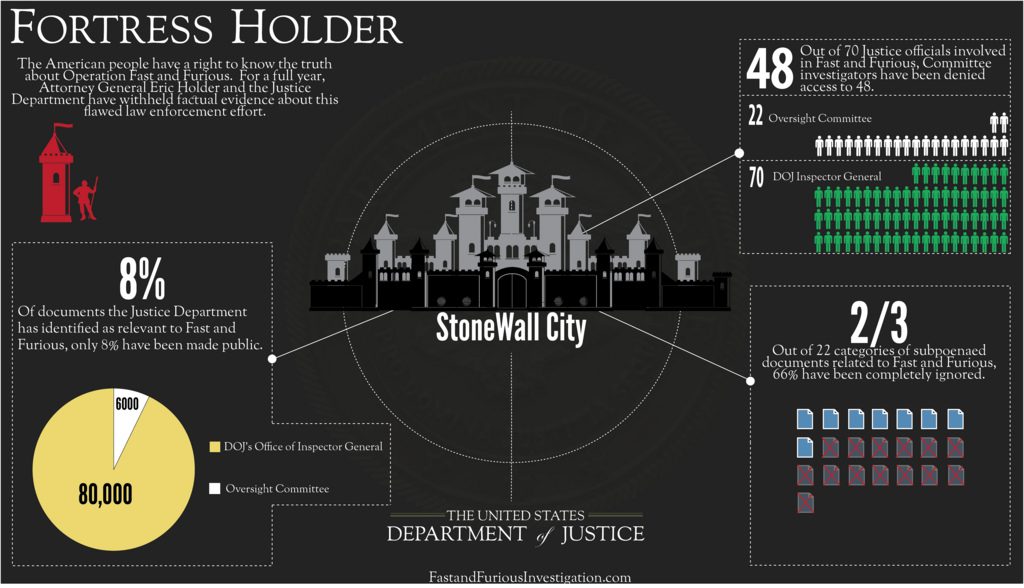
Infographics, if done well, are an excellent way to condense data and still make the information usable. That has been the emphasis behind the work of Edward Tufte for years.
This one from the House Oversight Committee gets the point across very well in my opinion.
 |
| Courtesy of the House Oversight and Government Reform Committee |
The House Oversight and Government Reform Committee has released Chairman Darrell Issa’s prepared opening statement for today’s hearings into Operation Fast and Furious.
Chairman Issa Hearing Preview Statement
Over the past year, the ATF program known as Operation Fast and Furious has been the subject of a joint investigation by this committee and Sen. Chuck Grassley, who serves as the Ranking Member of the Senate Judiciary Committee. When this investigation began, the Department of Justice took the position that allegations by whistleblowers about reckless tactics and decision making in this operation were false.
Late last year, after months of investigation, the Justice Department finally acknowledged the allegations were true. Fast and Furious was both reckless and flawed.
The Justice Department, however, has been less than forthcoming in cooperating with the efforts of Congressional investigators to determine exactly what happened and who was responsible:
• The Justice Department has delivered fewer than 8% of the 80,000 documents we know it has identified as being related to this flawed operation.
• It has refused to allow investigators access to numerous witnesses who participated in the operation – one witness, after being served with a subpoena, invoked his Fifth Amendment right to protection against self-incrimination rather than answer questions.
• Justice Department now asserts that many documents pertaining to internal discussions and decision making about its response to Operation Fast and Furious are off-limits to investigators.
The American people deserve better from our nation’s top law enforcement agency. Thursday’s hearing will feature the nation’s top law enforcement official, Attorney General Eric Holder, who will be asked to explain his decision to withhold this factual evidence from investigators. What he is concerned this information would reveal? Why is the Department trying to keep its internal discussions about Operation Fast and Furious from after February 4, 2011 secret? Why did it take nearly nine months for the Justice Department to acknowledge its earlier denials were false? Why did senior Justice Department officials who knew about and received briefings on the operation fail to stop it? Should Americans have confidence in their chief law enforcement agency even though these same officials remain in their posts?
There is now broad bipartisan agreement that the congressional investigation into Operation Fast and Furious has exposed a serious and deadly failure of government. We know that the life of a brave Border Patrol agent has been lost along with countless Mexican citizens who have been victimized by guns from Operation Fast and Furious. Attorney General Holder has acknowledged that the danger created by Fast and Furious will continue for years.
This hearing is not about controversial struggles between gun control advocates and supporters of the Second Amendment. It is about the unifying, and what should be bipartisan, expectation that the Justice Department be held to a high standard and that those who failed to meet this standard should be held accountable. I look forward to Attorney General Holder’s testimony.
Much of the hearings and much of what has been released has been about incompetence which is a start but doesn’t go far enough. I would suggest that this operation could be more accurately be considered a subversion of the Constitution. I may be jaded but I don’t think a reasonable person would conclude that such a Keystone Cops approach to the Mexican drug cartels was ever meant to work. Rather it was meant as a way to build support for greater and greater gun control measures. If one reads John Ross’ Unintended Consequences or Matthew Bracken’s Enemies Foreign and Domestic which are fiction and then compare Operation Fast and Furious to them, the similarities become downright eerie.
Mike Vanderboegh has seen the briefing paper from the Committee titled “Main Justice: Extensive Involvement in Operation Fast and Furious.” Buried within it is evidence that leads to involvement by the FBI in parts of this operation or a concurrent operation called Operation Headshot.
So, since October the committee staff have been aware of the FBI sanitized version of the “one-armed man” and his brother who were their confidential informants, who provided the money to the straw buyers and whom the FBI have been protecting ever since Brian Terry was murdered. But does the Committee draw the obvious conclusion? Have they aggressively probed the FBI on Operation Head Shot? If this pathetic entry is any indication, no, they haven’t. The FBI, it seems, is off limits.
So now you have a troika of agencies – ATF, DEA, and FBI – involved to some degree in Project Gunwalker. Such coordination of effort among agencies doesn’t just happen without a controlling hand from above in Main Justice. This leads me again to say this wasn’t about the cartels but rather about building the case for more gun control. This administration is the most Machiavellian since Richard Nixon and it fits their under the radar approach to these issues.
Attorney General Eric Holder’s prepared statement that will be delivered before the House Oversight and Government Reform Committee has been posted on the committee’s website.
I think I can summarize the gist of it in three words – Bush did it.
The similarities in the arguments between Holder’s testimony and the so-called report released yesterday by the Democrats on the Oversight Committee make a prima facie case for coordination on this by the White House, the Department of Justice, and the Committee Democrats.
Holder’s testimony is below. I have highlighted some relevant passages but have resisted the urge to insert commentary which might be scatological in nature.
Statement of
Eric H. Holder, Jr.
Attorney General
United States Department of Justice
Before the Committee on Oversight and Government Reform
United States House of Representatives
February 2, 2012Chairman Issa, Ranking Member Cummings, and members of the Committee, I am here today because I understand and appreciate the importance of congressional oversight, and because I am committed to ensuring the highest standards of integrity and professionalism at the Department of Justice. That’s precisely what I pledged to do – exactly three years ago tomorrow – when I was sworn in as Attorney General. And it is exactly what I have done.
My dedication to the Department’s mission is shared by an extraordinary group of
colleagues: the 117,000 employees who – each day, in offices all around the world – work tirelessly to protect the American people from a range of urgent and nprecedented threats – from global terrorism and violent crime, to financial fraud, human trafficking, civil rights abuses, and more. Over the last three ears, we’ve made a number of significant improvements, including policy and personnel changes that address many of the concerns that are the subject of this hearing. Today, I’d like to discuss some of these improvements in specific terms – and outline the steps that we have taken to ensure that the flawed tactics used in Operation Fast and Furious – and in earlier operations under the prior Administration – are never again used.If some of my comments today sound familiar, it is because this marks the sixth time I have answered questions about this operation before a congressional committee in the last year. Let me start, however, with something that cannot be said often enough: allowing guns to “walk” – whether in this Administration or in the prior one – is wholly unacceptable. This tactic of not interdicting weapons, despite having the ability and legal authority to do so, appears to have been adopted in a misguided effort to stem the alarming number of illegal firearms that are trafficked each year from the United States to Mexico. To be sure, stopping his dangerous flow of weapons is a laudable – and critical – goal. But attempting to achieve it by using such inappropriate tactics is neither acceptable nor excusable.
That’s why, when I learned early last year about the allegations raised by ATF agents involved with Fast and Furious, I took action. In addition to requesting an Inspector General investigation last February, I ordered that a directive be sent prohibiting the use of such tactics. There also have been important personnel changes in the Department. And vital reforms reflecting the lessons we have earned from Operation Fast and Furious have been implemented.
Today, I reaffirm my commitment to ensuring that these flawed tactics are never used again. And I reiterate my willingness to work with Congress to address the public safety and national security crisis along our southwest border that has taken far too many lives.
Congress has sought answers to questions about law enforcement Operations Wide
Receiver and Fast and Furious. And my colleagues and I at the Department of Justice have worked diligently to provide those answers. In addition to my frequent testimony before Congress, I have answered – and am continuing to answer – questions that have been submitted for the record during previous hearings. The Department also has responded to more than three dozen letters from members of Congress and facilitated numerous witness interviews. We also have submitted or made available for review more than 6,400 pages of documents to congressional investigators. This has been a significant undertaking for Department employees – and our efforts in this regard remain ongoing.We also have provided Congress with virtually unprecedented access to internal deliberative documents to show how inaccurate information was initially conveyed in a letter sent to Senator Grassley on February 4, 2011. These documents show that Department officials relied on information provided by supervisors from the relevant components in the best position to know the facts. We now know that some of the information they provided was inaccurate. We also understand that, in subsequent interviews with congressional investigators, these supervisors have stated that they did not know at the time that the information they provided was inaccurate.
In producing internal communications regarding the drafting of the February 4th etter, the Department made a rare, limited exception to longstanding Executive Branch policy. This decision reflected unusual circumstances and allowed us to respond, in the most comprehensive way possible, to congressional concerns where the Department itself concluded that information in the letter was inaccurate. The documents we produced have answered the question of how that letter came to be drafted and put to rest questions about any intentional effort to mislead. All of our communications to Congress should be accurate and that is the standard I expect the Department to meet. At my direction, the Deputy Attorney General has instituted new procedures to increase safeguards in this area.
As I testified in a previous hearing, the Department does not intend to produce additional deliberative materials about the response to congressional oversight or media requests that postdate the commencement of congressional review. This decision is consistent with the longstanding approach taken by the Department, under both Democratic and Republican administrations, and reflects concerns for the constitutionally-protected separation of powers.
Prior administrations have recognized that robust internal communications would be
chilled, and the Executive Branch’s ability to respond to oversight requests thereby impeded, if our internal communications concerning our responses to congressional oversight were disclosed to Congress. For both Branches, this would be an undesirable outcome. The appropriate functioning of the separation of powers requires that Executive Branch officials have the ability to communicate confidentially as they discuss how to respond to inquiries from Congress.I want to note that the separation of powers concerns are particularly acute here, because the Committee has sought information about open criminal investigations and prosecutions. This has required Department officials to confer about how to accommodate congressional oversight interests while also ensuring that critical ongoing law enforcement decision-making is not compromised, and is free from even the appearance of political influence. Such candid internal deliberations are necessary to preserve the independence, integrity, and effectiveness of the Department’s law enforcement activities and would be chilled by disclosure to Congress of such materials. Just as we have worked to accommodate the Committee’s legitimate oversight needs, I trust that the Committee will equally recognize the Executive Branch’s constitutional interests and will work with us to avoid further conflict on this matter.
I know the Committee also is keenly interested in policy changes that the Department has undertaken in the wake of Operation Fast and Furious. The ATF, which is now under the leadership of Acting Director Todd Jones, has implemented a number of key reforms and critical oversight procedures to prevent such a flawed operation from occurring again. These reforms include: clarifying current firearms transfer policies to more effectively prevent the criminal acquisition, trafficking, or misuse of firearms; implementing a new Monitored Case Program designed to facilitate closer coordination on sensitive investigations between ATF field and headquarters personnel; revising policies regarding the use of confidential informants to, among other things, prevent using Federal Firearms Licensees as paid informants except in limited circumstances; and reinforcing the importance of deconfliction and information sharing so law enforcement agencies can investigate subjects more effectively.
I’m also pleased to report that, under the leadership of the Department’s Criminal
Division, we’ve bolstered crime-fighting capacity on both sides of the U.S./Mexico border. We’ve done this by creating new cartel-targeting prosecutorial units; developing new procedures for using evidence gathered in Mexico to prosecute gun traffickers in U.S. courts; training thousands of Mexican prosecutors and investigators; extraditing more than 300 defendants wanted by U.S. law enforcement; successfully advocating for enhanced sentencing guidelines for convicted traffickers and straw purchasers; and pursuing coordinated, multi-district investigations of gun-trafficking rings.This is an important start, but we have more to do. And no one knows this better than the members of our nation’s law enforcement community – including the ATF agents who testified before this Committee last summer. Not only did these agents bring the inappropriate and misguided tactics of Operation Fast and Furious to light, they also sounded the alarm for more effective laws to combat gun trafficking and improve public safety.
These agents explained that ATF’s ability to stem the flow of guns from the United States into Mexico suffers from a lack of effective enforcement tools. Unfortunately, in 2011, a majority of House Members – including all members of the majority on this Committee – voted to keep law enforcement in the dark when individuals purchase multiple semi-automatic rifles, shotguns, and long guns – like AK-47s – in gun shops in four southwest-border states.
In this new year, I hope we can work together to provide law enforcement agents with the tools they desperately need – and have requested – to protect our citizens and ensure their own safety. Indeed, incidents of violence against law enforcement officers are approaching the highest levels we’ve seen in nearly two decades, even though violent crime is down overall. Last year, a total of 177 federal, state, and local officers lost their lives in the line of duty – a 16 percent increase over 2010. More than 70 of these deaths involved firearms – 20 percent more than the previous year. And, since the beginning of this year, an additional 14 officers have been killed – half of them in gun-related incidents.
That is unacceptable. The Justice Department is committed to turning back this rising tide, and to protecting those who serve on the front lines. We’ve designed and implemented a comprehensive new training initiative to provide law enforcement leaders with the information, analysis, and cutting-edge tools they need to respond to a range of threats – including ambush style assaults. We’ve developed and distributed 8,000 Officer Safety Toolkits, and have partnered with public safety professionals at every level to make sure our officers have the communications platforms necessary to share information more quickly – and to more effectively identify and combat threats. And we’ve built a robust network of elationships – between state, local, and tribal authorities; key federal partners; private sector stakeholders; and Cabinet-level agencies – to explore new strategies, invest in critical research, and ensure that this vital work remains a top priority. Let me be clear: nothing is more important than ensuring the safety of the brave law enforcement professionals who put their lives at risk for us each and every day.
But we can’t make the progress we need – and that our law enforcement partners deserve – without your assistance and your leadership. As I have said before, I am determined to ensure that our shared concerns about these flawed law enforcement operations lead to more than wornout Washington “gotcha” games and cynical finger pointing. The Department of Justice stands ready to work with you – not only to correct the mistakes of the past, but also to strengthen our law enforcement capacity in the future.
I look forward to discussing this, and I would be pleased to answer your questions.
The family of murdered Border Patrol Agent Brian Terry is suing the ATF for $25 million in Arizona state court for their role in his death. They are also suing Lone Wolf Trading Company in a second suit.
According to the claim, agent Terry was patrolling near Rio Rico on the night of Dec. 14, 2010 when he was shot and killed by criminals yielding assault rifles. Those rifles were traced to a straw purchaser for Mexican drug cartels in Arizona who the ATF knew about and allowed to deliver the weapons to the cartels.
“The murder of agent Terry and other acts of violent crimes were the natural consequence of ATF’s decision to let dangerous weapons designed to kill human beings ‘walk’ into the hands of violent drug-trafficking gangs,” the complaint reads.
The claim also contends that the circumstances that led to Terry’s murder were not isolated events, but rather there were thousands of guns purchased under occasional ATF surveillance with no way of tracking all the weapons from straw purchases.
The suit against Lone Wolf Trading Company is asking for unspecified damages. It says the company should have recognized just how risky these sales were but ignored it. Moreover, it says they knew that the ATF was letting the guns walk and should refused to participate in future straw purchases.
Bob Owens suggests that pulling Lone Wolf into the equation was a smart move.
By pulling Lone Wolf into the equation, the family’s attorney’s are creating a situation where Lone Wolf is going to be forced to give up what they know and pressure the ATF into providing documents for their defense as well.
I think he may be on to something there.
Watch the latest video at <a href=”http://video.foxnews.com”>video.foxnews.com</a>
We expect politicians to say stupid things. It is just the normal course of events. However, there are times when the stupid things they say just need to be pointed out.
Case in point is a Virginia legislator by the name of Joe Morrissey. Mr. Morrissey is a Democrat and represents the 74th District. This district is compromised of parts of Richmond, Henrico County, Hopewell, Charles City County, and Prince Georges County. According to his campaign biography, Delegate Morrissey is a graduate of U.Va., Georgetown Law, and Trinity College, Dublin where he obtained a Masters of Laws. In addition, he served for four years as a Commonwealth’s Attorney in Richmond. My point here is that he is a very well educated person and has front-line experience with criminal law as a Commonwealth’s Attorney.
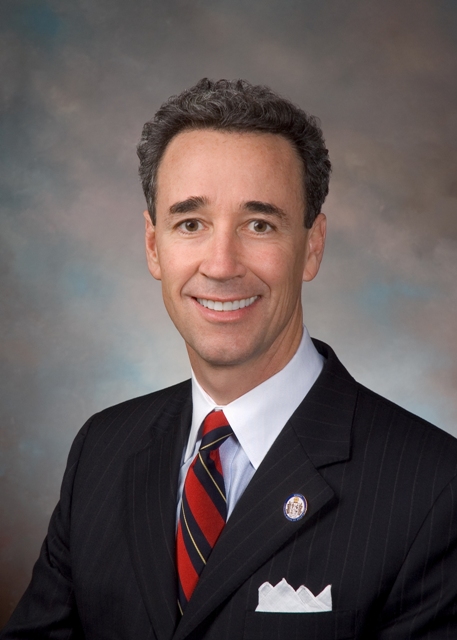
Delegate Morrissey opposed the repeal of Virginia’s one handgun a month restriction which just passed the House of Delegates in a 66-32 vote. He made the following statement just before that vote:
“If this bill is passed, an individual can go into any gun store and buy an unlimited number of guns,” warned Del. Joseph D, Morrissey, D-Henrico moments before the vote.
“Let’s be clear what’s going to happen,” Morrissey added. “Some crack addict is going to be given half a gram of coke, he is going to be given a Virginia driver’s license…and he will go into a place and he will buy nine or 10 Glocks or 357s or whatever.…and we will return to the days where we are the gun capitol of the South.”
There are so many things wrong with this statement that I don’t even know where to begin.
I guess I will start with ATF Form 4473 where each false answer is considered an individual felony. Question 11.a asks whether the person is the actual buyer of the firearm. Then you have Question 11.e which asks if the individual is an unlawful user or addicted to a “controlled substance” which crack cocaine obviously would be.
After filling out the Form 4473, said straw-purchasing crack addict who has just committed two Federal felonies must have this purchase submitted to the FBI for the NICS check. This is assuming the dealer in question hasn’t already either refused the sale or called the cops. I would think a fake driver’s license from Virginia is going to come up as a red flag in the NICS database and the sale denied.
Under the Gun Control Act of 1968, multiple handgun purchases (more than one from the same dealer in any five business day period) are reported to the Bureau of Alcohol, Tobacco, Firearms, and Explosives. A copy of Form 3310-4 is sent both to the National Tracing Center and to local law enforcement by the end of the same business day.
Finally, Richmond has been the location of a special cooperative project between the U.S. Attorney’s Office, the Commonwealth Attorney’s Office, the Richmond PD, ATF, the FBI, and the Virginia State Police called Project Exile. The goal of this program was to use the stiffer Federal law to prosecute criminals, felons, and drug uses in possession of a firearm. It has since been supplanted by a statewide state-run program called Virginia Exile. I find it hard to believe that any attorney in Virginia is not somewhat aware of this program and this is especially true of an anti-gun politician.
As I wrote earlier, politicians say stupid things but in this case it was really stupid. About the only people who are taken in by such rhetoric are the gun prohibitionists and other true believers.
The Audience Award for Best Short Movie at the recent Sundance Movie Festival was “The Debutante Hunters.” It is a short movie directed by Maria White about a group of women hunters in South Carolina. It explores how they got started hunting and why they love hunting.
I think it is fantastic that this movie illustrates that hunting is not just a guy thing and that even the most girly-girls can and do enjoy hunting. Moreover, these are real women with real guns and not some group of “enhanced” models in skimpy clothing. Since the movie probably won’t be appearing at a movie theater near you, I have embedded it below.
Sen. Chuck Grassley (R-IA) today dismissed out of hand the attempt by Rep. Elijah Cummings (D-MD) and the other Democrats on the House Oversight and Government Reform Committee to exonerate senior Department of Justice officials involved in Operation Fast and Furious.
“The idea that senior political appointees have clean hands in these gunwalking scandals doesn’t pass the laugh test, especially considering we’ve seen less than 10 percent of the pages that the Justice Department has provided the Inspector General. They ignored the warning signs and failed to put a stop to it or hold anyone accountable. Lanny Breuer is a senior political appointee, and he admits to knowing about gunwalking as early as April 2010. Documents turned over late Friday night indicate he was still discussing plans to let guns cross the border with Mexican officials on the same day the Department denied to me in writing that ATF would ever let guns walk. He stood mute as this administration fought tooth and nail to keep any of this information from coming out for a year. It will take a lot more than a knee-jerk defense from their political allies in Congress to restore public trust in the leadership of the Justice Department. The American people want to see those who failed to act be held accountable.”
In his release he pointed to documents which show senior officials not only knew about it but were involved. They can be seen here and here.
The quote of the day comes from Townhall.com’s Katie Pavlich who calls them as she sees then with regard to the behavior of the Democrats on the House Oversight and Government Reform Committee.
Although Cummings claims he wants to bring justice to the Terry family for his murder, which was a direct result of this recklass (sic) program, he has done the opposite by using the scandal to promote new gun control measures, implying ATF should be given more power and as a chance to blame President Bush for using the “same tactics” that were used during Fast and Furious for other programs during his time in the White House. During Bush-era “gunwalking” programs, the Mexican government was informed and cooperating with ATF to interdict and follow guns into Mexico. During Fast and Furious under President Obama, Mexican officials were left in the dark as 2500 guns were delivered to the hands of ruthless cartel members thanks to DOJ and ATF officials.
Note to Cummings: Your cover-up is showing.