Those Are Rookie Numbers!

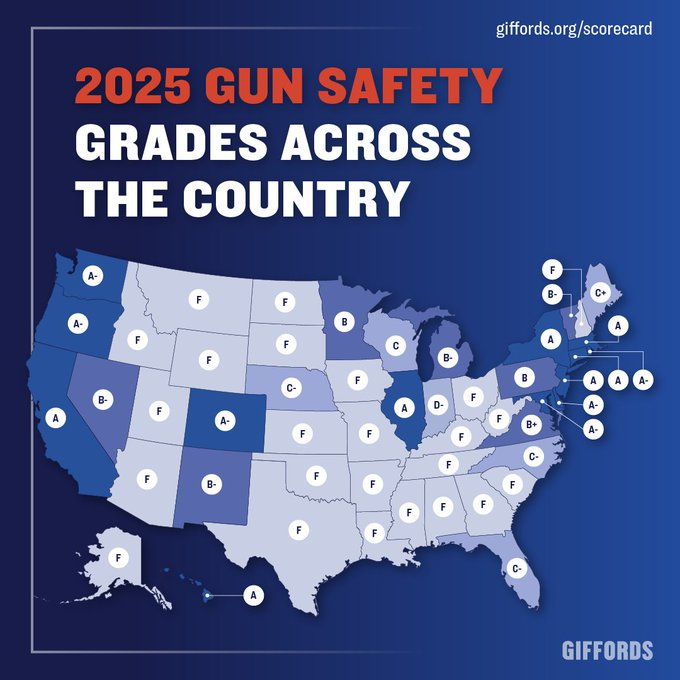
The cult of personality known as Giffords gives North Carolina a C-. The Tar Heel State needs to do better. If Tennessee and South Carolina can get an F, why can’t we. If we will finally override Gov. Stein’s veto of SB50 on permitless concealed carry, I bet that would help.

On a more serious note, Giffords “reports” that North Carolina ranks 19 out of 50 in gun death rank. I’m not sure how this is determined. That said, given that North Carolina is the ninth largest state in the United States by population, our per capita rate is better than one would expect.

A Day That Will Live In Infamy Plus 84 Years

I missed posting on Pearl Harbor Remembrance Day last year for which I sincerely apologize. I have tried to recognize the day every year since I started this blog in 2010. Part of it is due to the history and part of it is due to family history. It may be a myth but my Mom’s brother, my Uncle John, supposedly skipped college along with a number of his friends on December 8th, 1941 to enlist in the US Navy. He was a freshman at Manhattan College’s Staten Island Division which was adjacent to St. Peter’s High School where he had graduated.

My Uncle John passed away in 2008 at the age of 83. He did serve in the Navy as an Electronics Technician, first at Floyd Bennett Field in Brooklyn and later on the USS Bennington. His interest in electronics in the Navy lead to a 35 year career with IBM as a service engineer.

While 2,000 survivors attended the 50th anniversary in 1991, today only 12 survivors of Pearl Harbor remain. Unfortunately, none will be able to attend ceremonies in Hawaii. As all are centenarians, travel at their age is hard.

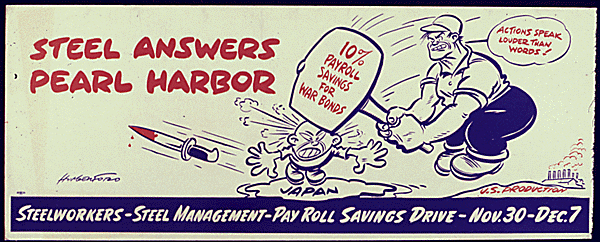
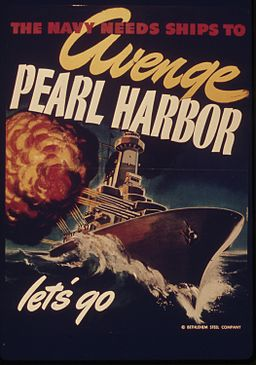
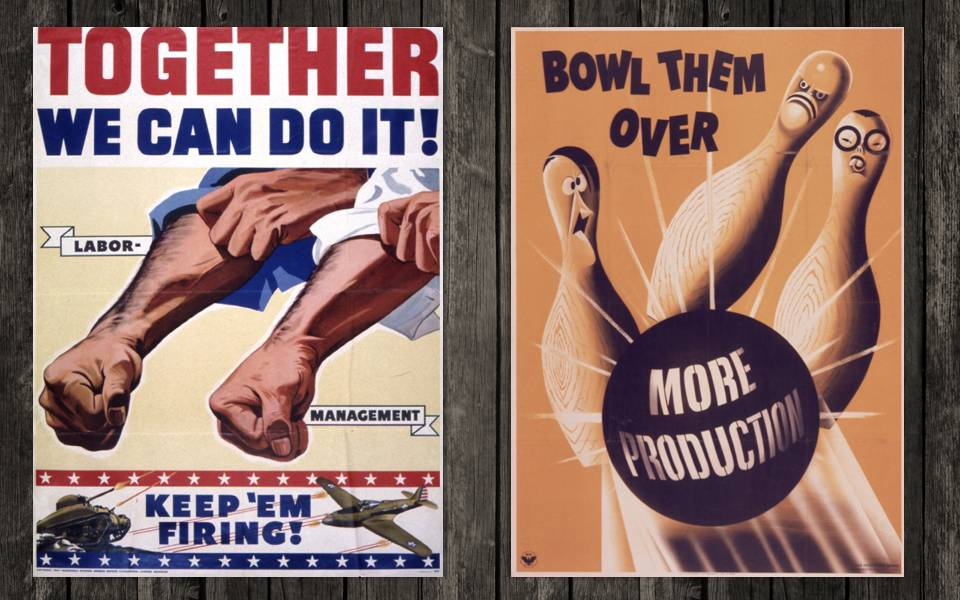
Lest we forget this day in US history, I will do my best to remember it every year featuring stories and posters on the attack. As you can see in the poster below, the attack was used to help unite the nation and its workers in the post-attack rebuilding.

First Glances Can Be Wrong

Sometimes first glances can tell you everything you need to know and sometimes you really must dig deeper. Such is the case with the Form 990 reported compensation for 2024 for certain former executives of the NRA.

When I first saw the reported compensation for Wayne LaPierre in the Form 990 I was shocked. How can the NRA be paying Wayne $1.15 million for just one month’s worth of work. WTF? Is this the rumored “golden parachute”? Was it some sort of payoff to make him resign just before the trial portion of the New York AG’s trial of the NRA and the various individual defendants?

The answer to all my questions above is a resolute and absolute no.

Compensation for executives, directors, key employees, and highest compensated employees is reported in Part VII of the Form 990. It gives the aggregate amount of reportable compensation for each named employee along with an estimated amount of other compensation such as non-taxable health benefits and NRA retirement contributions.

However, to understand how these numbers were derived you must dig further. The Form 990’s Schedule J, Part II and Part III, contain the information that allows you to break apart the reportable compensation figures.

Below is a spreadsheet I compiled on the compensation for five former NRA executives who left either in 2024 or 2023. They were Wayne LaPierre, EVP; Tyler Schropp, Executive Director of Advancement; Randy Kozuch, Executive Director of NRA-ILA; Joe DeBergalis, Executive Director of General Operations; and Andrew Arulanandam, Interim EVP.

Prior to my retirement, I worked for 25 years as a financial and retirement planner. In addition, I held the Certified Financial Planner designation for 20 of those years until I relinquished after retirement. I also taught a class on retirement planning for 10 years as part of Western Carolina University’s BSBA in Finance program. I give this background as the basis for explaining what the numbers above actually mean.

Let’s take things in order. First, a payout of accrued vacation or PTO is normal when a person leaves an organization. This is lumped in with base pay to give total base pay. In Wayne’s case, it appears he had over a month’s worth of accrued vacation that was paid out.

Moving down to group life insurance. Under IRS rules, the cost of the first $50,000 of coverage is exempt from taxation. However, the premium for benefit amounts above $50,000 is taxable and is considered income for the employee. Given most group life insurance plans pay at least one year’s salary, the premium for all of these five former employees is certainly going to have a taxable element.

A 457(b) non-governmental or “Top Hat” plan is a supplemental retirement plan for executives or key employees. Unlike a typical 401(k) plan, it must discriminate. In retirement-plan speak, this means it can only be offered to a select number of employees and is not available to the rank and file employee. By contrast, a 401(k) must be available to all employees and is tested such that the highly compensated or key employee does not get a bigger benefit than the non-highly compensated. This often results in the highly compensated or key employee not being allowed to make a full contribution to their 401(k) plan.

Contributions to the 457(b) Top Hat plan have limits. In 2024 the contribution limit was $23,000 and was lower in earlier years. The amounts in the 457(b) plan and their earnings are deferred until such time as the executive withdraws it on termination of employment. These amounts cannot be rolled over to an IRA so as to defer taxation until a later date. Further, this plan remains unfunded meaning it remains an asset of the organization and it is available to creditors in the event of a bankruptcy. Even if a “rabbi trust” was established meaning it couldn’t be used for general expenses of the NRA, it would be at risk in case of a bankruptcy. One wonders if the Brewer law firm told this little tidbit to Wayne when he authorized the abortive bankruptcy filing.

When looking at the taxable compensation of the former executives in question, you can tell a significant portion of the total compensation for both Wayne and Joe DeBergalis came from monies that they had previously set aside for retirement. In Wayne’s case, it was over 70% of his taxable compensation.

457(f) plans are another type of non-qualified, deferred compensation plan intended to attract and retain highly compensated employees. It is meant for executives in tax exempt and govenrmental entitites. Unlike the 457(b) Top Hat plan, it has no limit on the amount that can be deferred into it and an executive could defer almost 100% of his or her salary. Like the 457(b) plan, assets in these plans remain the property of the employer and are subject to the claims of general creditors. However, the biggest difference is when amounts in these plans become taxable as ordinary income. Unlike the 457(b) where taxation occurs upon withdrawal from the plan, the 457(f) plan uses the substantial risk of forfeiture rule. This means that until the executive meets a certain threshold of service such as 5-10 years of service or other requirements they remain unvested in the plan. Thus, if they leave before then, the monies revert back to the employer. However, once an executive vests in the 457(f) plan, the balance becomes taxable even if it remains in the plan. Only Wayne and Tyler Schropp had any payouts from the 457(f) plan. Schropp seems to have made extensive use of it as it compromised 40% of his taxable compensation.

Taxable personal expenses are just that. Personal expenses paid by the NRA for the executive for which the NRA could not take a deduction. This could be a gym or country club membership, personal use of a car owned by the NRA, or something similar. These expenses are included in taxable compensation of the employee.

The non-taxable benefits included in the total compensations (taxable and non-taxable) would be employer paid amounts for such things as health and dental plans as well as short and long term disability plans. I am not sure what influences the disparity in the numbers.

The final item that I’d like to cover is the severance payout to Joe DeBergalis. Most contracts hold a severance clause requiring a payout amount based upon years of service or something similar. Given he was summarily replaced with Andrew Arulanandam as Executive Director of General Operations towards the end of 2023 and forced out of the NRA, I will assume his severance agreement covered that. I would also guess it had a non-disclosure agreement attached. The severance payout and 457(b) payout occurred in 2024 so it would be considered 2024 taxable income and not for 2023 when he actually left the NRA.

As I said in the headline, first glances can be wrong. When one digs down through the numbers, you find that especially in the case of Wayne, Schropp, and DeBergalis that their total compensation amounts were greatly impacted by things other than a high salary. Wayne didn’t get a golden parachute, Schropp got almost half of his compensation from retirement payouts, and DeBergalis’ compensation was a combination of severance and retirement payouts.
A Red Letter Day For Transparency

Today marks a red letter day for transparency at the NRA. Governance materials including three years of Form 990s, the up-to-date NRA Bylaws, NRA Committee responsibilities, and NRA Board minutes going back to 2022 are now available for all members to see online.

The announcement to the Board:

Dear Board and Executive Council members:

I’m pleased to report that in response to the resolution passed at the September meeting, governance materials (including meeting minutes, Forms 990, and the Bylaws) have been posted to the member self-service website. 

These items are now available to registered members at https://www.nramemberservices.org/.  (Once you’ve signed in, go to the menu on the left and scroll down to “Governance Information.”)

Many thanks to April Miller in my office, and Gary Dent and Don Zimmer in Information Services, for their hard work in making this happen.

Sincerely,

John Frazer

Getting these materials online has been something of a personal mission for me. I offered the resolution at the 2025 Meeting of Members that was passed thanks to the votes of virtually all who attended. As I noted at the time, my resolution was the rare resolution that went directly to the Board and not to one of its committees. It was worded as a “request” and not an “order”.

The Board approved my resolution at our September meeting to direct the EVP to put these materials online. It was decided to table the live streaming of Board meetings due to the cost of approximately $15,000. The Secretary’s Office was a great help in wording and formatting the final resolution.

I see this as not only a win for transparency but a win for the members who for too long were treated like mushrooms. In other words, they were kept in the dark.

Suggestions For Giving Tuesday

The Tuesday after Thanksgiving has now become Giving Tuesday. The intent is to unleash the power of generosity by encouraging people to do good, participate in a global day of giving back, and support charities and communities. It has somewhat leftist origins as it was intended as a repudiation of the consumerism of Black Friday and Cyber Monday. That said, there is no reason that donations cannot be given to organizations that support causes that are not leftist in intent.

Every organization or foundation I will be suggesting is a 501(c)3 non-profit charity. Donations are tax deductible. However, with most people taking the standard deduction, this is somewhat irrelevant this year. However, starting in 2026, you will be able to deduct up to $2000 (married filing jointly) in charitable contributions even if you take the standard deduction.

Here are my suggestions. If you have others, leave them in the comments.

Rights Watch International

Rights Watch International is the 501(c)3 affiliate of Grass Roots North Carolina. Monies donated to RWI go to support Second Amendment civil rights litigation, to fund amicus briefs on 2A cases, and to fund non-partisan political education. Donations can be made online here. In full disclosure, I serve as the Treasurer of RWI.

DSC Carolinas Foundation

DSC Carolinas Foundation is the Dallas Safari Club chapter covering all of North Carolina and a good part of South Carolina. Our mission is to help fund conservation projects along with youth and hunter education. I say “our” because I am a founding director of this chapter. Donations can be made through our Paypal account. If you are in the Carolinas, as a reminder our banquet will be held on January 31st in Huntersville, NC.

Hunter Nation Foundation

Not only does Hunter Nation educate on America’s hunting heritage, their program called Hunt the Vote works to get the 50% of hunters that don’t vote out to the polls. I heard a presentation by Keith Mark, the founder and CEO of Hunter Nation, in September to the NRA’s Hunting and Wildlife Conservation Committee. I was greatly impressed by their efforts to get out the vote especially those who are registered and haven’t voted in recent elections. With the 2026 mid-terms around the corner, these efforts are critical. You can contribute here.

NRA Freedom Action Foundation

Just like Hunter Nation works to get the vote out, so does NRA Freedom Action Foundation through their Trigger the Vote program. The Freedom Action Foundation provides non-partisan Second Amendment education across the board to all Americans. Information on how to donate can be found here.

NRA Civil Rights Defense Fund

The NRA CRDF supports Second Amendment litigation on both the individual level and in broader cases. On the individual level, it helps supports individuals in their defense against violations of federal, state, and local laws that prohibit the acquisition or possession of firearms. Additionally, the CRDF helps fund civil rights litigation which challenges anti-2A laws such as AWBs, magazine restrictions, etc. Just as importantly, the CRDF supports legal research on the Second Amendment and gun rights. I know a number of the trustees of the CRDF personally and I trust them to do the right thing with your donation. You can donate here.

Second Amendment Foundation

No organization has done more or been more at the forefront of Second Amendment civil rights litigation than the Second Amendment Foundation. Whether it was McDonald v. Chicago, North Carolina’s Bateman v. Perdue, Ezell I and II, or the many other cases, the SAF has been there. In more recent times, they have prudently filed joint cases with the Firearms Policy Coalition and their foundation, the NRA, and other 2A organizations. Where they are not the plaintiff, they have filed amicus briefs which is a critical aspect of civil rights litigation. Donations can be made here.

FPC Action Foundation

This is the 501(c)3 affiliate of the Firearms Policy Coalition. Their mission is more libertarian than other 2A groups. They said it is “to create a world of maximal human liberty, defend constitutionally protected rights, advance individual liberty, and restore freedom.” That said, they are funding a lot of Second Amendment litigation. It is often is conjunction with the FPC, the SAF, and even the NRA. Donations can be made here.

Gun Owners Foundation

The Gun Owners Foundation is the 501(c)3 arm of Gun Owners of America. Grass Roots North Carolina has partnered with them on a number of amicus briefs and lawsuits. In addition to supporting 2A litigation and amicus briefs one distinctive thing that GOF does is support FOIA requests. This has been helpful in shedding light on many government agencies especially ATF. You can donate to them here.

There are many other deserving groups working in the conservation, hunting, and Second Amendment litigation realm. Many of these are affiliated with your state or local firearms or conservation groups.

As I said at the top of this post, if you have others that you think are worthy of your donations, please leave their names and info in the comments.

Update: Another organization worthy of support is the Firearms Research Center at the University of Wyoming College of Law. Headed by legal scholar George Moscary, the FRC supports legal and academic research into firearms and Second Amendment issues. Unlike the Duke Center for Firearms Law, the FRC is pro-Second Amendment. They have just recently been awarded a large grant from the US Dept of Education to develop a national program that will provide secondary school teachers with nonpartisan, historically grounded content on the origins, legal interpretation and civic implications of the Second Amendment. You can donate to them here.

Tweet And Meme Of The Day

The tweet of the day which includes a meme comes from our friends at the Firearms Policy Coalition. If anything points out the hypocrisy of the prohibitionists, it is their use of Jim Crow gun laws as historic support for gun control. Those laws were an abomination in the post-Civil War era and they remain so today.

One only needs to look to North Carolina’s former pistol purchase permit to understand this. It took 104 years to get it repealed. The impetus for that law was white supremacy which was only possible if blacks and others were disarmed.