An Insult To North Carolinians

Yesterday, Governor Bev Perdue announced that she was appointing former U.S. Representative Bob “Who are you?” Etheridge as the new Director of the NC Office of Economic Recovery and Investment.

Nearly 80 percent of the state recovery funds have been dispersed and the money will continue to flow through at least 2012. Projects to date include train station expansions, highway improvements, new water and sewer projects for local governments, historic expansion of the state’s broadband network, funding to keep teacher positions across the state and assistance towards single family home ownership.

In his new position, Etheridge will oversee how the funds are dispersed, ensuring that money continues to be spent in a timely fashion with high accountability, and will make sure the projects under contract are getting done.

For overseeing the administration of the remaining 20% of the “stimulus” funds, Etheridge will be paid $98,500 a year. Of course, this is on top of his pension as a (forcibly) retired Congressman.

Michelle Malkin commented on this appointment saying:

That’s right. Etheridge was booted out of office thanks to the Tea Party movement — which coalesced against the federal porkulus — and now he gets to redistribute porkulus wealth on the public’s dime.

To give this a gun rights related spin, Etheridge’s NRA-PVF ranking was D. His opponent, Rep. Renee Ellmers, was AQ rated and eventually got the NRA endorsement.

Opinion And Formal Ruling Released In California AB 962 Case

From the California Rifle and Pistol Association:

Frenso Court Issues Formal Ruling Finding Ammunition Regulations are Unconstitutionally Vague

2/2/2011

February 2, 2011 – The Fresno County Superior Court has issued its awaited formal Opinion holding that AB 962, the law that would have banned mail order ammunition sales and imposed burdensome record keeping requirements on gun dealers, is unconstitutional. In its 22 page Order, the Court held that “[a]fter careful consideration, the Court finds that the definition of ‘handgun ammunition’ as established in Penal Code §§ 12060(b) and 12318(b)(2) is unconstitutionally vague and, [that] because the definition of ‘handgun ammunition’ is vague, Penal Code §§ 12060, 12061, and 12318, which define and regulate sales and transfers of ‘handgun ammunition’ are also impermissibly vague.” The Court’s Order Denying Plaintiffs’ Motion for Summary Judgment and Granting in Part Plaintiffs’ Motion for Summary Adjudication is posted here.

The ruling was issued in the case of Parker v. California, No. 10CECG02116 (Super. Ct. Fresno, Filed June 17, 2010). The Parker lawsuit alleged, and the Court agreed, that AB 962 was unconstitutionally vague on its face because it failed to provide sufficient legal notice of what ammunition cartridges were “principally for use in a handgun,” and thus considered “handgun ammunition” regulated under AB 962. It was practically impossible, both for those subject to the law and those responsible for its enforcement, to determine whether any of the thousands of different types of ammunition cartridges that can be used in handguns were actually “principally for use in” or used more often in, a handgun. The proportional usage of any given cartridge is impossible to determine, and in any event changes with market demands. In fact, the legislature itself was well aware of the vagueness problem with AB 962’s definition of “handgun ammunition” and tried to redefine it via AB 2358 in 2010. AB 2358 failed in the face of opposition from the NRA and CRPA based on the proposal’s many other nonsensical infringements on ammunition sales to law abiding citizens.

The Court’s ruling follows the issuance on January 24th of a Permanent Injunction that prevents enforcement of the provisions of AB 962 (Penal Code sections 12060, 12061, and 12318.) The January 24th Order of Permanent Injunction followed the dramatic ruling on January 18th that AB 962 was unconstitutionally vague on its face. By enjoining enforcement of these statutes, mail order ammunition sales to California can continue unabated, and ammunition sales need not be registered under the law.

The lawsuit was prompted in part by the many objections and questions raised by confused police, ammunition purchasers, and sellers about what ammunition is covered by the new laws created by AB 962. In a highly unusual move that reflects growing law enforcement opposition to ineffective gun control laws, Tehama County Sheriff Clay Parker was the lead plaintiff in the lawsuit. Other plaintiffs included the CRPA Foundation, Herb Bauer Sporting Goods, ammunition shipper Able’s Ammo, collectible ammunition shipper RTG Sporting Collectibles, and individual Steven Stonecipher. Mendocino Sheriff Tom Allman also supported the lawsuit.

Parker v. California was funded exclusively by the NRA and the CRPA Foundation. Had it gone into effect, AB 962 would have imposed burdensome and ill conceived restrictions on the sales of ammunition. AB 962 required that “handgun ammunition” be stored out of the reach of customers, that ammunition vendors collect ammunition sales registration information and thumb-prints from purchasers, and conduct transactions face-to-face for all deliveries and transfers of “handgun ammunition.” The lawsuit successfully sought a declaration from the Court that the statute was unconstitutional, and successfully sought the injunctive relief prohibiting law enforcement from enforcing the new laws.

Constitutional vagueness challenges to state laws are extremely difficult to win, particularly in California firearms litigation so this success is particularly noteworthy. Even so, an appeal by the State is likely, but the Court’s Order enjoining enforcement of the law became effective February 1, 2011 regardless.

Despite this win for common sense over ill-conceived and counter productive gun laws, additional legislation on this and related subjects will no doubt be proposed in Sacramento this legislative session. It is absolutely critical that those who believe in the right to keep and bear arms stay informed and make their voices heard in Sacramento. When AB 962 passed there was a loud outcry from law abiding gun owners impacted by the new law. Those voices must be heard during the legislative session and before a proposed law passes, not after a law is signed. To help, sign up for legislative alerts at www.nraila.com and www.calnra.com and respond when called upon.

Stephen Halbrook On The Swiss And Guns

Switzerland will be voting on February 15th on a proposal to ban firearms in the home. Currently, the country has one of the best gun laws in the world and every Swiss man who belongs to the Swiss Army keeps his service rifle and ammunition at home. The Swiss Rifles website has more on the Swiss tradition of riflery as well as the threat to Swiss gun rights.

Cam and Company featured an interview with attorney and scholar Stephen Halbrook on Switzerland and their tradition of gun ownership.

Magazine Ban In FAA Bill?

There have been emails and blog posts racing across the Internet today about an attempt to slip Carolyn McCarthy’s magazine bill into a non-controversial FAA Modernization Bill.

I got the email forwarded to me by Grass Roots North Carolina. I have seen other versions sent out by the Virginia Citizens Defense League on the War On Guns. Even Instapundit has it.

The source of the rumor is the National Association for Gun Rights.

Checking the amendments submitted for S. 223, FAA Air Transportation Modernization and Safety Improvement Act, as published in the Congressional Record, I don’t find anything remotely concerned with a magazine ban.While Senator Frank Lautenberg does have three amendments submitted, they deal with smoking, the time for the improvements to take place, and staffing at Newark Airport.

This is not to say that there won’t be an attempt to insert the language banning standard capacity magazines but rather that no attempt has been made that is verifiable as of now. The Senate is in session today and the topic is debating S. 223.

UPDATE: Checking the Congressional Record for February 2nd which contains the debate on S. 223 and all the newly introduced amendments, nothing related to firearms or a magazine ban was introduced. The only mention of firearms was by Senator Carl Levin (D-MI) who was discussing a budget rescission of unspent monies by the Department of Justice and he referenced Project Gunrunner as an example.

The Senate will continue debating S. 223 today. Of course, more amendments could be proposed and passed.

Bloomberg Challenges Obama On Gun Control

Michael Bloomberg, not satisfied with conspiracy to commit a felony in Arizona, is now pushing Obama on gun control according to the Washington Post.

And he is now on a media blitz to push Obama on the issue. The White House has said Obama will soon “address” the issue of gun control, but it has been vague on exactly what he will say or whether he will propose any additional funding or new laws.

“The president should stand up” on gun issues, Bloomberg said in an appearance Tuesday on “The Rachel Maddow Show.” He added, “It’s one of the issues he can build a legacy on.”

I’m not sure that Obama wants his legacy to be a one-term President.

Here is the video from the Rachel Maddow show. The discussion of gun control starts at about the one minute mark.

If any prosecutor had the gumption enough, he ought to seek an indictment of Bloomberg for conspiracy. If the private investigator buyers are non-residents of Arizona and Bloomberg funded them, no matter what his good intentions were, this is conspiracy to violate Federal gun laws which is a felony. However, I doubt any charges will ever be brought against Bloomberg.

Another California Senator Heard From

I think this letter, when combined with the recent ATF study on the importation of shotguns, may signify a strong push to use the sporting purposes requirement of the Gun Control Act of 1968 to clamp down on imports of firearms. In other words, since the gun prohibitionists know a frontal assault is unlikely to succeed, they will work the flanks in their gun control efforts.

As to the use of part kits to assemble functional firearms, I think Feinstein misstates Section 922(r). I think we are all aware that compliance with Section 922(r) requires the use of a significant number of American parts in assembly. In other words, you just can’t slap a receiver on a parts kit and be legal. 27CFR178.92 specifies what is required to make a firearm compliant with Section 922(r). Now if Feinstein is urging that no combination of U.S. and foreign made parts remain legal, it is even more troublesome.

Senator Feinstein Urges President Obama to Prohibit Imported Assault Weapons

Washington, DC – U.S. Senator Dianne Feinstein urged President Obama to prohibit the importation of military-style assault firearms that contribute to violence in the United States and Mexico.

Following is the text of the letter from Senator Feinstein to President Obama:

January 31, 2011

The Honorable Barack H. Obama
The White House
Washington, D.C. 20500

Dear Mr. President:

I write to urge you to review enforcement of the Gun Control Act of 1968 (GCA) provision, 18 U.S. Code Section 925(d)(3), which prohibits the importation of firearms except those that are “generally recognized as particularly suitable for or readily adaptable to sporting purposes.” Previous Administrations have used this authority to limit the importation of military-style assault firearms, and it could once again be a helpful tool in preventing the gun trafficking that is fueling the horrific gun violence in Mexico, the Southwest border region, and many cities and towns across our nation.

Since December 2006, more than 30,000 people have been killed in Mexico in drug-related violence. Every day, there are reports of ruthless and brutal gun murders as Mexican drug trafficking organizations (DTOs) fight for control of smuggling routes and terrorize anyone who might get in their way. The DTOs have killed mayors, judges, and other officials who have tried to stop the carnage. They have even targeted young people, murdering 14 teenagers at a birthday party in Ciudad Juarez in October of last year.

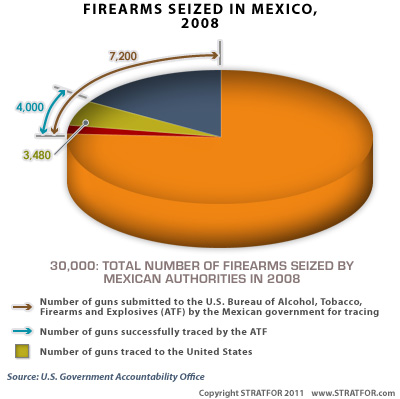
Regrettably, firearms trafficked from the United States help fuel the violence in Mexico. Of the firearms recovered by the Government of Mexico and traced through ATF in the past 4 years, more than 50,000 were manufactured in, or imported into, the United States prior to being recovered in Mexico. The Bureau of Alcohol, Tobacco, Firearms and Explosives (ATF) and other federal, state and local law enforcement are working to stop this gun trafficking and related violence, but they need additional help. The Administration recently took an important step forward with ATF’s initiative to collect information on multiple sales of semi-automatic assault rifles from Federal Firearms Licensees (FFLs) in California, Arizona, New Mexico, and Texas. I applaud you for this initiative. However, much more must be done.

Under the GCA, the Administration has the authority to prohibit the importation of non-sporting firearms. In 1989, in response to growing drug gang violence, the ATF under President George H.W. Bush denied applications to import a series of semiautomatic rifles that it found were designed and intended to be particularly suitable for combat rather than sporting applications. Similarly, in 1997, President Clinton used this authority and ordered ATF to conduct an expedited review to determine whether modified semiautomatic assault-type rifles were properly importable under the statutory sporting purposes test. In April 1998, ATF determined that rifles with the ability to accept a detachable large capacity military magazine “are not generally recognized as particularly suitable for or readily adaptable to sporting purposes and are therefore not importable.”

Since the Clinton Administration’s efforts, the GCA’s prohibition against non-sporting firearms has not been aggressively enforced, and many military-style, non-sporting rifles have flowed into the United States civilian market. Some of the rifles are cheap AK-type variants from former Eastern bloc countries, while others are more expensive, high-tech weapons. All of them, however, share military-style characteristics that should make them ineligible for import. Furthermore, it appears that some importers are bringing in rifle parts and reassembling them with a small number of domestically manufactured components. This practice has gone unchecked, despite Section 922 (r) of the GCA, which prohibits using imported parts to assemble any semiautomatic rifle or any shotgun which is identical to any rifle or shotgun prohibited from importation under 18 U.S. Code Section 925(d)(3).

I urge you to review enforcement of the GCA and take any regulatory steps necessary to stop the both the importation of all military-style, non-sporting firearms, and the assembly of those firearms from imported parts. We must ensure that law enforcement has all the necessary resources and tools needed to stop the gun violence that is taking a deadly toll in Mexico and in our country. I look forward to working with you toward that goal. Thank you for your attention to this urgent issue.

Sincerely,

Dianne Feinstein
Chairman
United States Senate Caucus on International Narcotics Control

cc: Eric Holder, Attorney General
Kenneth Melson, Acting Director of the ATF

The Californication Of Concealed Carry

Senator Barbara Boxer (D-CA) introduced S. 176, the Common Sense Concealed Firearms Permit Act of 2011, last week. The text has finally become available.

This bill, if passed, would convert “shall issue” concealed carry back to “may issue” nationwide. Moreover, it would abolish constitutional carry. The bill sets the requirement to show “good cause” which is at the center of lawsuits such as Kachalsky v Cacace, Peruta v San Diego, Muller v Maenza, and Woollard v Sheridan.

Nowhere in the bill is any justification or finding that a Federal standard for concealed carry is constitutional. Traditionally, police powers, i.e. relating to health, safety, and welfare, have been left to the states.

A BILL

To establish minimum standards for States that allow the carrying of concealed firearms.

Be it enacted by the Senate and House of Representatives of the United States of America in Congress assembled,

SECTION 1. SHORT TITLE.

This Act may be cited as the `Common Sense Concealed Firearms Permit Act of 2011′.

SEC. 2. CONCEALED FIREARMS PERMITS.

(a) In General- Chapter 44 of title 18, United States Code, is amended by inserting after section 926C, the following:

`Sec. 926D. Concealed firearms permits

`(a) In General- Each State that allows residents of the State to carry concealed firearms shall–

`(1) establish a process to issue permits to residents of the State to carry concealed firearms; and

`(2) require that each resident of the State seeking to carry a concealed firearm in the State obtain a permit through the process established under paragraph (1).

`(b) Requirements- In establishing a process to issue permits to carry concealed firearms under subsection (a), a State shall–

`(1) ensure that a local law enforcement agency participates in the process; and

`(2) at a minimum, require that an applicant for a permit to carry a concealed firearm–

`(A) be a legal resident of the United States;

`(B) be not less than 21 years of age;

`(C) demonstrate good cause for requesting a concealed firearm permit; and

`(D) demonstrate that the applicant is worthy of the public trust to carry a concealed firearm in public.

`(c) Law Enforcement Agency Report- If a State establishes a process under subsection (a) that allows for an agency other than a law enforcement agency to issue permits to carry concealed firearms, the process shall require that–

`(1) a local law enforcement agency submit to the agency responsible for issuing permits a written report that describes whether the applicant meets the standards of the State to carry a concealed firearm; and

`(2) the agency responsible for issuing permits maintain a report submitted under paragraph (1) in the file of the applicant.

`(d) Definition- In this section, the term `local law enforcement agency’ means a law enforcement agency of the unit of local government with jurisdiction of the area in which the applicant for a permit to carry a concealed firearm resides.

`(e) Compliance- Not later than 270 days after the date of enactment of this section, each State described in subsection (a) shall be in compliance with this section.’.

(b) Technical and Conforming Amendment- The table of sections for chapter 44 of title 18, United States Code, is amended by inserting after the item relating to section 926C the following:

`926D. Concealed firearms permits.’.

Somehow I Just Don’t Trust This iPhone App

I stumbled across a press release on the ATF website announcing that they had update their iPhone app.The release said:

ATF Announces New Version of App for Apple iPhone and iPod Devices
WASHINGTON — The Bureau of Alcohol, Tobacco, Firearms and Explosives (ATF) today announced the latest release of its mobile application for Apple iPhone and iPod touch devices. With the ATF app, developed in cooperation with NIC Inc., users can learn about ATF history and areas of expertise, find their local ATF field office and sign up for e-mail updates on the latest ATF related news.

“ATF strives to use new technology to educate the public about its role in reducing firearms-related violence and making dangerous communities safe places to live,” said Scot Thomasson, chief of ATF Public Affairs Division. “Working with NIC in the development of this downloadable app, ATF hopes to reach a younger and more tech savvy portion of the population.”

It is almost sounds like some Saturday Night Live skit featuring Frank Sinatra singing the Beatles because “the kids like this stuff.”

Frankly, I wouldn’t be surprised if this app somehow could monitor my calls, surveil me while out shooting, or kill my dog. Now I know that sounds paranoid but ATF is one agency that I have a hard time trusting especially around canines.

NSSF On The ATF Shotgun Study

The NSSF released this today. I think they got it right where they say it isn’t for the Federal government to decide an event is sporting if the participants consider it a sport.

The National Shooting Sports Foundation (NSSF) is currently reviewing the recently released study by ATF on the importability of shotguns. NSSF will be submitting comments to ATF by the May 1, 2011 deadline. NSSF’s initial reaction to the study is that if the shooting public deems a certain activity to be “sporting” through participation, even if that sport is new and seems unconventional to the uninitiated, NSSF does not believe the federal government should say that the firearms law abiding citizens use to participate in that shooting sport activity are neither “particularly suitable for nor readily adaptable to generally recognized sporting purposes” pursuant to the Gun Control Act of 1968. Many new sport shooting disciplines have arisen since 1968 and have enjoyed significant participation. The federal government ought not to be making subjective decisions about what lawful shooting activities it considers a sport.

The safe and responsible participation in new and evolving sporting events does not result in injury. The possession of firearms in the hands of law abiding Americans for any lawful purpose, including but not limited to sports shooting, does not cause crime.

The Supreme Court’s decisions in Heller and McDonald make clear that the exercise of the fundamental individual right to keep and bear arms for self defense protected by the Second Amendment does not hinge on whether one will use the firearm to participate in an activity the government deems to be sufficiently sporting. The shotguns this study would ban from importation are also suitable for self protection including home defense.

NSSF believes the time has come for Congress to re-examine the so-called “sporting purpose” test as a criteria for importing a firearm into the United States.